 English
 Čeština
 Français
 Deutsch
 polski
 Español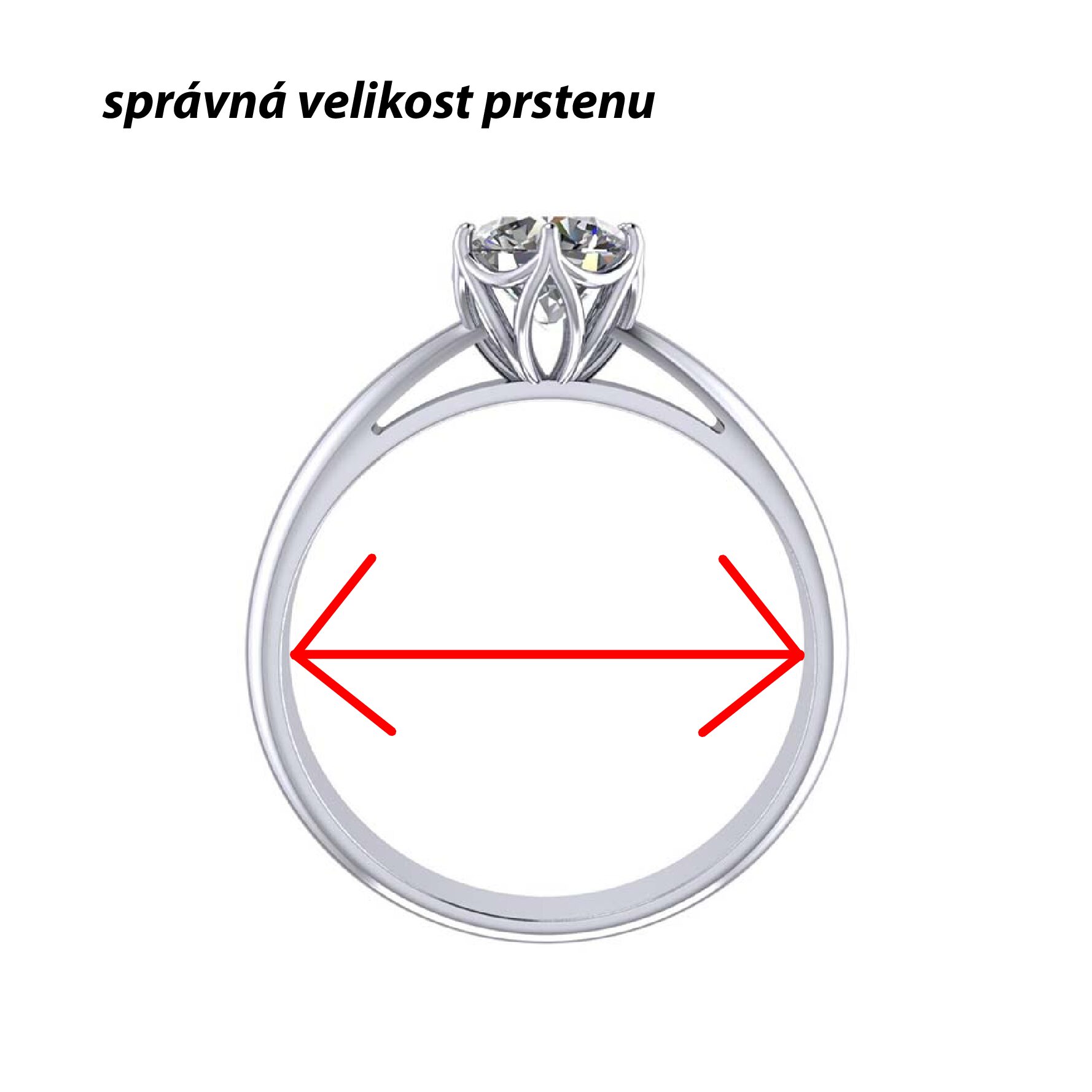
How to Choose the Right Ring Size?
2.7.2025
Which Diamond Colour Should You Choose?
23.1.2026
Anatomy of a lab-grown diamond
Lab-grown diamonds are attracting more and more attention. They are more eco-friendly, more affordable, and at the same time chemically, optically and physically identical to natural diamonds. Thanks to modern technology, customers now have the option of buying a high-quality diamond with a completely clear and ethical origin.
In this article we will take a detailed look at the internal and external anatomical “blueprint” of a diamond, what parts it has, how it is graded, and what this means for its appearance and price.
What is a lab-grown diamond?
A lab-grown diamond is a carbon crystal created in a controlled laboratory environment. Just like a natural diamond, it is made up of carbon atoms arranged in a crystal lattice, which gives it its unique properties.
How are lab-grown diamonds made?
There are two main technological processes:
-
HPHT (High Pressure High Temperature) – simulates the high pressure and temperature similar to those found in the Earth’s crust.
-
CVD (Chemical Vapor Deposition) – uses carbon-based gases, which are converted into a solid crystal inside a chamber.
Both methods produce a diamond that is visually indistinguishable from a natural one.
Physical and optical properties
Lab-grown diamonds have:
-
Hardness of 10 on the Mohs scale – the highest known value, just like a natural diamond.
-
Refractive index of 2.42 – provides strong brilliance and sparkle.
-
High light dispersion – contributes to its flashes of colour (fire).
-
Resistance to scratching and wear – ideal for everyday wear.
Main parts of a diamond
Understanding the structure of a diamond helps you better grasp how the cut affects its sparkle and how each part contributes to the reflection of light.
Crown
-
The upper part of the diamond above the girdle.
-
Contains the table and the crown facets.
-
Affects the amount of light entering the stone.
Girdle
-
The widest part of the diamond, separating the crown and the pavilion.
-
Allows the stone to be securely set into the piece of jewellery.
-
Can be polished, frosted or faceted.
Pavilion
-
The lower part of the diamond below the girdle.
-
Plays a key role in reflecting light back to the viewer’s eye.
-
If the pavilion is too deep or too shallow, the diamond loses brilliance.
Culet
-
A tiny point at the bottom of the pavilion.
-
An ideal culet is very small or absent entirely – a larger culet can reduce brilliance.
Depth, height and proportions
-
The total depth of a diamond is measured from the table to the culet.
-
The height-to-width ratio has a major influence on how the diamond reflects light.
-
Balanced proportions guarantee maximum brilliance and sparkle.
Cut shapes
The cut of a diamond determines not only its shape, but also the amount and quality of light reflected.
The most common shapes:
-
Round Brilliant – the most sparkly and most popular shape.
-
Princess (square) – modern, sharp lines, reflects light well.
-
Oval, Marquise, Pear – elongated shapes that optically enlarge the stone.
-
Emerald cut – elegant, best suited to clean stones with minimal inclusions.
Advantages of lab-grown diamonds
Ethics and sustainability
-
No mining is required, which would otherwise impact the environment.
-
No risks associated with conflict (blood) diamonds.
Lower price
-
Up to 30–70% cheaper than a natural diamond of the same quality.
-
A better price-to-weight-to-quality ratio.
Transparent origin
-
Every lab-grown diamond has a precisely documented origin and production process.
Diamond certification and grading (the 4Cs)
Lab-grown diamonds are graded by the same standards as natural ones. The decisive factors are the so-called 4Cs:
1. Carat
-
The weight of the diamond, 1 carat = 0.2 grams.
-
A higher carat weight means a larger stone, but the cut also matters.
2. Cut grade
-
Essential for appearance and sparkle.
-
Graded from “Poor” to “Excellent”.
3. Colour
-
Scale from D (colourless) to Z (yellow tint).
-
Lab-grown diamonds commonly reach D–H quality.
4. Clarity
-
Measures internal flaws (inclusions).
-
Grades: FL (Flawless), IF (Internally Flawless), VVS, VS, SI, I.
How to choose the right lab-grown diamond?
When choosing, focus on:
-
Certification (IGI, GIA, GCAL)
-
The combination of the 4Cs – the highest carat weight does not always mean the best stone
-
Cut quality – the biggest impact on brilliance
-
The purpose of the piece – engagement ring, earrings, pendant, etc.
A lab-grown diamond is not only a modern and responsible choice, but also a quality investment in beauty without compromise. Knowing its anatomy, cuts and grading will help you choose and compare stones more effectively. Whether you’re looking for an engagement ring or an anniversary gift, a lab-grown diamond offers all the advantages of a natural stone – without its drawbacks.
If you are unsure, feel free to contact us via WhatsApp: +420 777 222 121.
If you are still undecided, send us an inquiry and we will promptly send you an offer you can compare with no obligation.
We look forward to hearing from you soon!
If you have any questions about lab-grown & natural diamonds, feel free to write to us at: info@laboratornidiamanty.cz
Team ULTIMATE-GEMS s. r. o.